This post is from our Substack journal, Art it Play! Join us there for long-form weekly musings as we share stories, materials, spaces, and people that nurture creativity, agency, and flow.
We all know that museums and other institutions aren’t typically designed for busy, energetic little bodies, and even if children are welcome, it can feel a little tricky to navigate big open spaces with fragile art, use quiet voices, and feel connected to what we’re seeing, all while managing snack and bathroom breaks and, of course, the dreaded beeline for the gift shop. I am the parent of a 7-year-old and 10-year-old who feel most at home in big, expansive grassy areas or challenging their bodies in other ways, but we also really love to see art as a family. In fact, some of my favorite maternity leave memories include strapping on a baby and heading to a quiet museum on a weekday. I also think that looking at and exploring art images in the classroom is an incredible way to nurture curiosity, elicit questions, and invite new ways of playing and making.
Bar and I have collected some strategies over the years that we think make looking at and experiencing art very enjoyable and meaningful for children of all ages.
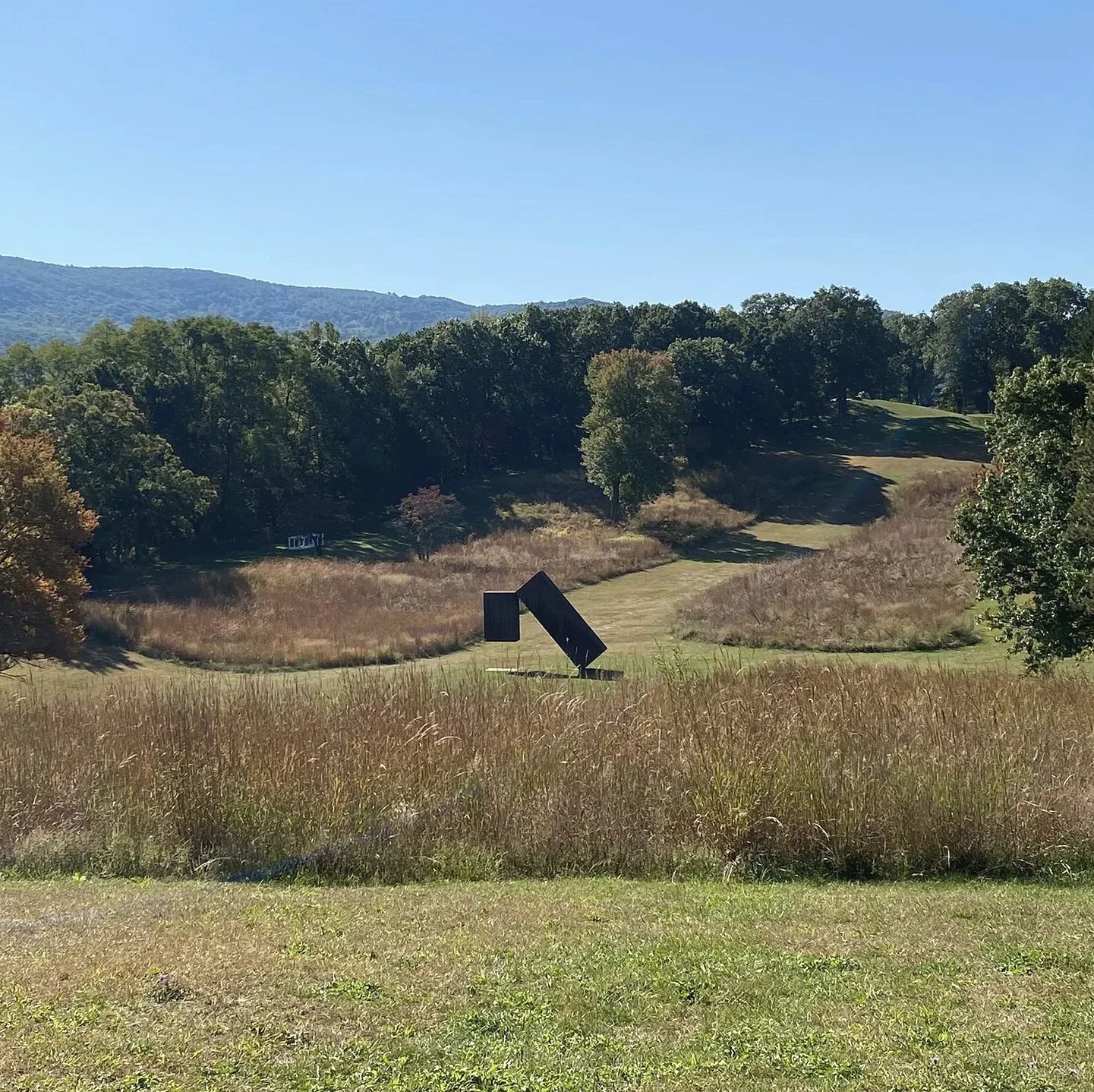
What could be a better day than traipsing around the gorgeous Storm King, a 500-acre outdoor sculpture park? This work by Menashe Kadishman is called Suspended. It reminds me of children’s blocks and playfulness penetrating the bucolic landscape! I think my 5-year-old at the time said, “What in the world are they doing there?”
Exploring Out and About
Seek out unconventional locations and installations.
Perhaps the most accessible advice we can offer is to find art wherever you are or go about finding art in parks, on the sides of buildings, and in open settings. We are lucky enough to live not too far away from Kentuck Knob, which is actually the site of a Frank Lloyd Wright house with a wooded sculpture park, including an Andy Goldsworthy piece called Floodstones Cairn. Andy Goldsworthy and other land artists who make work with temporal natural materials have long been a source of inspiration for us as educators and curriculum writers. You can check out some of his work online, and watch this great video from the National Galleries of Scotland, which has a retrospective of his work going on now through November! He inspires us endlessly to go outside to make patterns and arrangements with sticks, stones, leaves, flowers, whatever is available. Another inspiring sculpture park we both love is Storm King, not far outside of New York City in the Hudson Valley. You don’t have to live near a sculpture park to enjoy art in public. Look for murals, monuments, outdoor sculptures, graffiti and stickers, yarn bombs, gallery windows, and more wherever you are! Some of our best conversations have occurred when art surprises us in public. And this is great practice for engaging with art in an open environment where it’s pretty much fine to run or roll around.
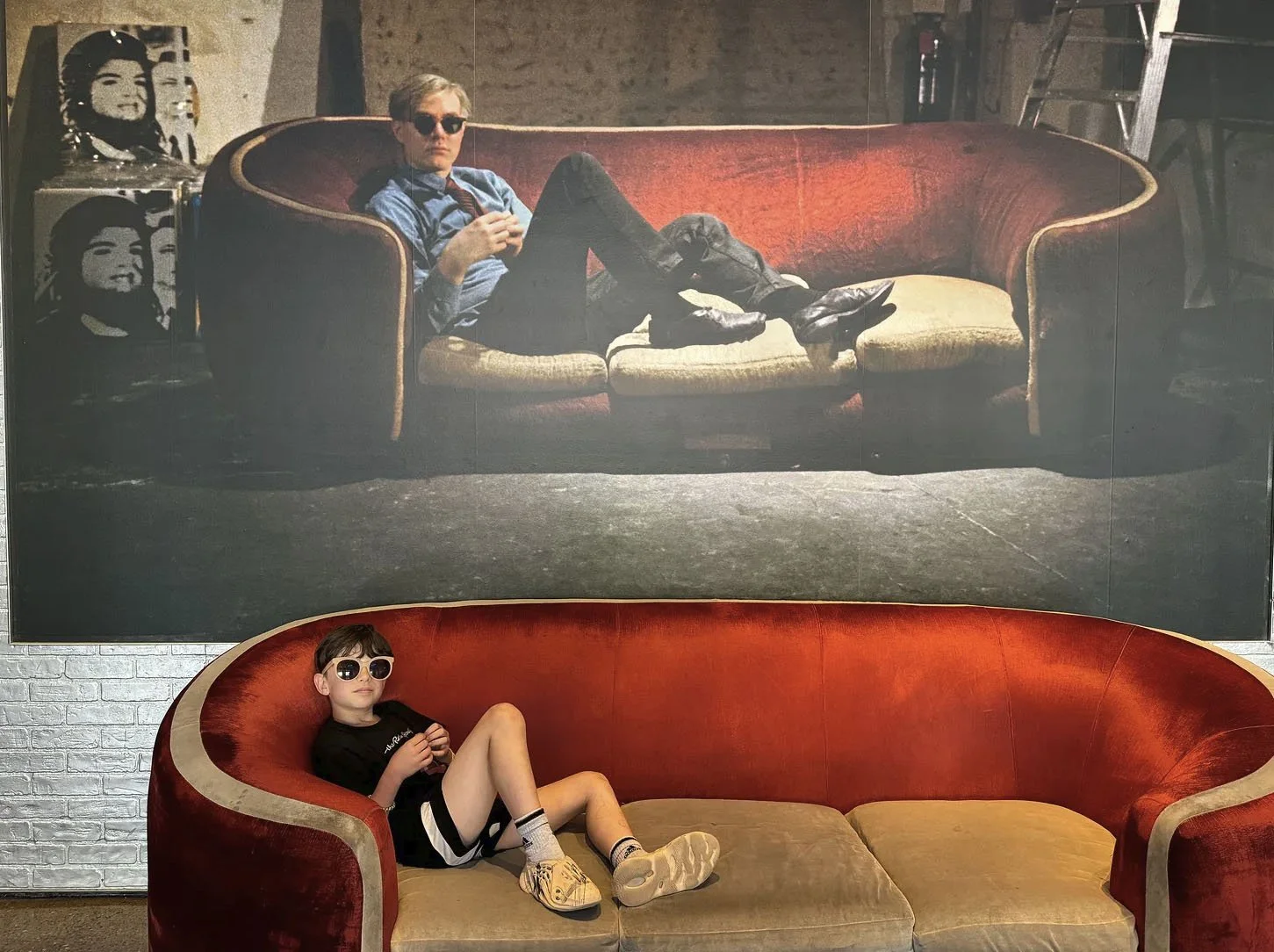
I’d say Graham nailed this one. You can even have children work in pairs to get the pose just right. I’m pretty sure Calvin directed him to turn out his left foot, etc.
Life imitates art.
Congrats! You made it inside a museum. What’s a quick, playful game you could play with a class on a field trip or with a couple of your own kids? This one is a good icebreaker. Art doesn’t have to be so serious. Find a work of art, respectfully stand at a safe distance, and imitate it! This was especially a hit at the Andy Warhol Museum here in Pittsburgh when we visited during the KAWS exhibition. But of course, we could not leave without first replicating Warhol’s iconic pose on his studio couch. If you need to lighten the mood or brighten things up, this will feel just right, especially with younger children. You can even ask children to find just one component or character in a composition and pose like they are. Or, if you’re looking at an abstract piece, ask them to imagine their body is the art. How can they position themselves to imitate?
Draw what you see.
Sometimes it’s fun to bring a dry-erase board and marker or a sketchbook along to a museum to practice some close and careful looking. You can prompt this slower noticing by inviting older children to draw one shape, make a face or an emoji that represents the mood to them, or draw the entire piece without looking at the paper or markerboard. If you have a child in a stroller, you could bring a drawing tablet along just to keep their hands busy as you talk about the art or just quietly look together.
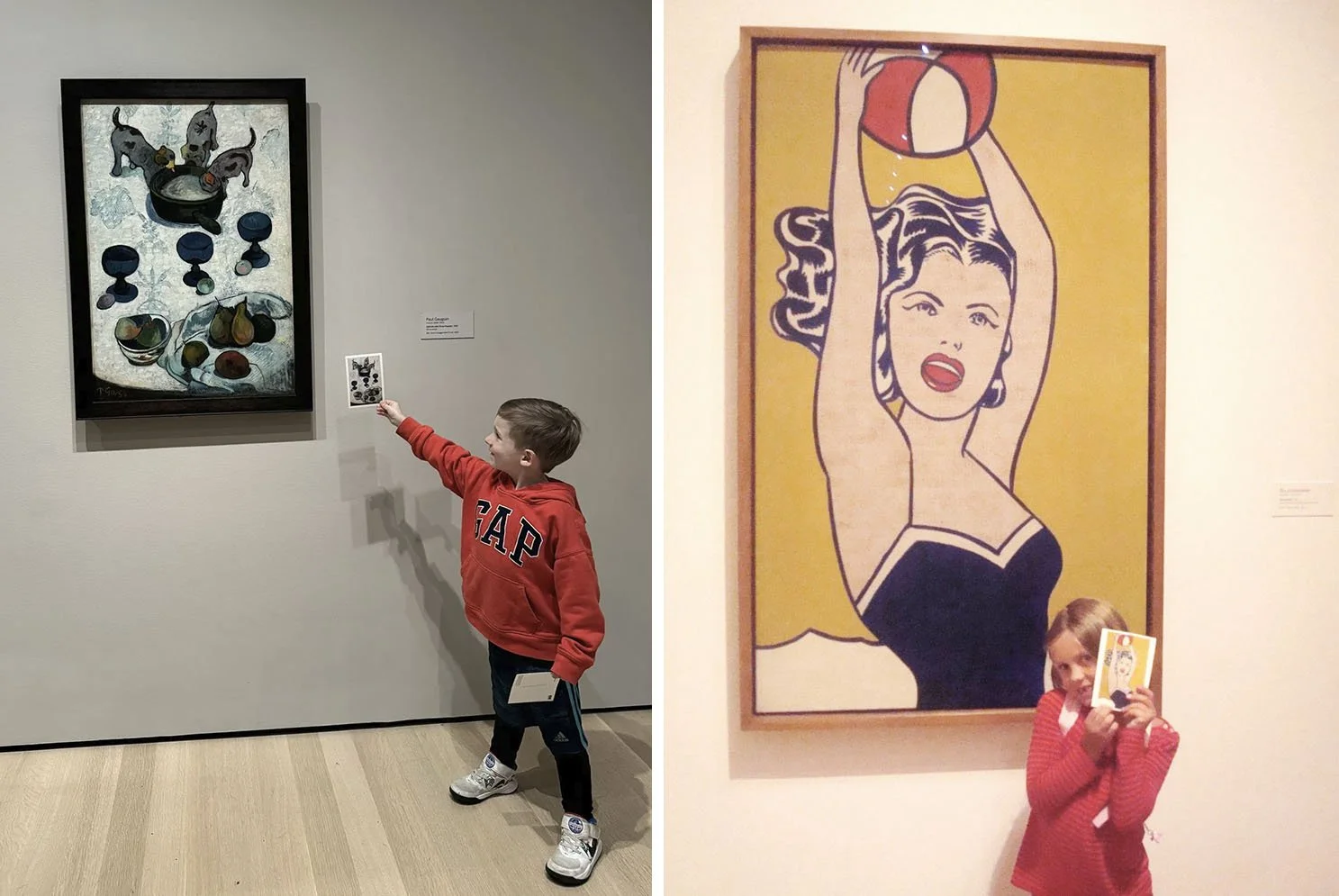
Ah, the satisfaction of finding a match! By the way, the museum attendants were more than happy to share information and participate in this scavenger hunt!
Scavenger hunt / I spy!
This one is the most fun, especially if you like a little competition and have multiple adults and kids. Bar shared this amazing idea with me years ago (read her blog post here), and it changed the way we experience museums. Visit the museum store first and grab a selection of postcards representing artworks in the collection. Then, go look for the real version! We tried this last year when we visited MOMA, and it was seriously the most fun. We had two adults and two kids, so we broke into teams with 5 cards each and posed in front of our finds. It was nice to break up and spend some one-on-one time together. This experience even encouraged my kids to ask the guards for help in finding the specific works of art in our collections. Bar shared this with me when our kids were much younger. We used the show pamphlet back then, and it was not a competition, just an opportunity to find the match. Still an element of excitement, though. There is nothing more joyful than seeing their surprise and delight in viewing the large, real-life version after just seeing a small thumbnail.
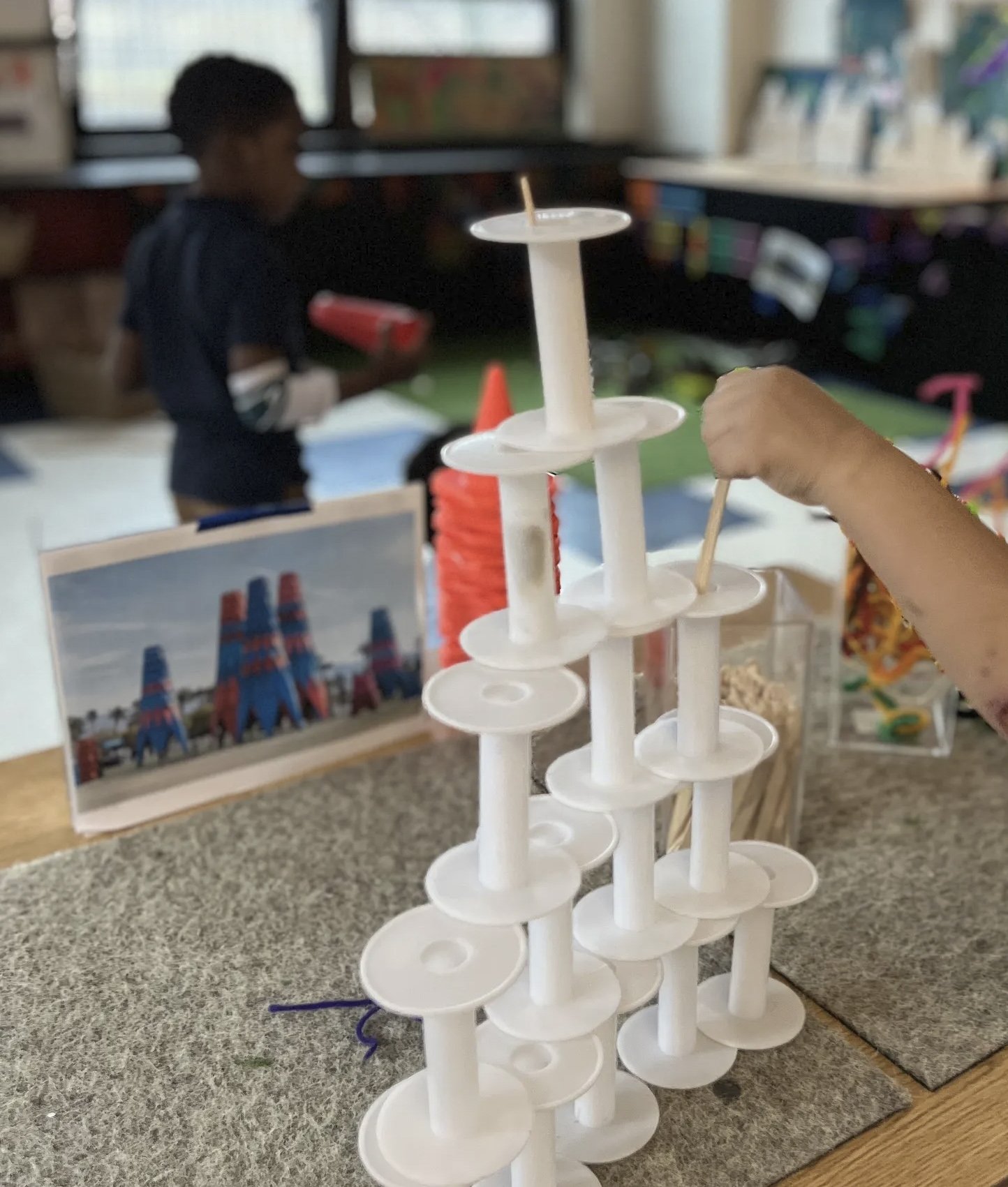
These felt mats ground the playing experience with a color photo and some unconventional building materials.
Back in the Classroom (or Home).
Play about it.
If you’re going to offer printed images or reproductions of artwork, consider offering them with materials so children can “play about it.” We love showing contemporary artists and architects who work with bold color and shape, like Diébédo Francis Kéré, because the connection to play materials and loose parts like blocks, cones, and spools is strong. You can check out art and architecture books from the library and prop them up by a table or on the floor near blocks or other building materials. This isn’t just for young children — imagine older kids representing an artwork in LEGO or Plus-Plus!
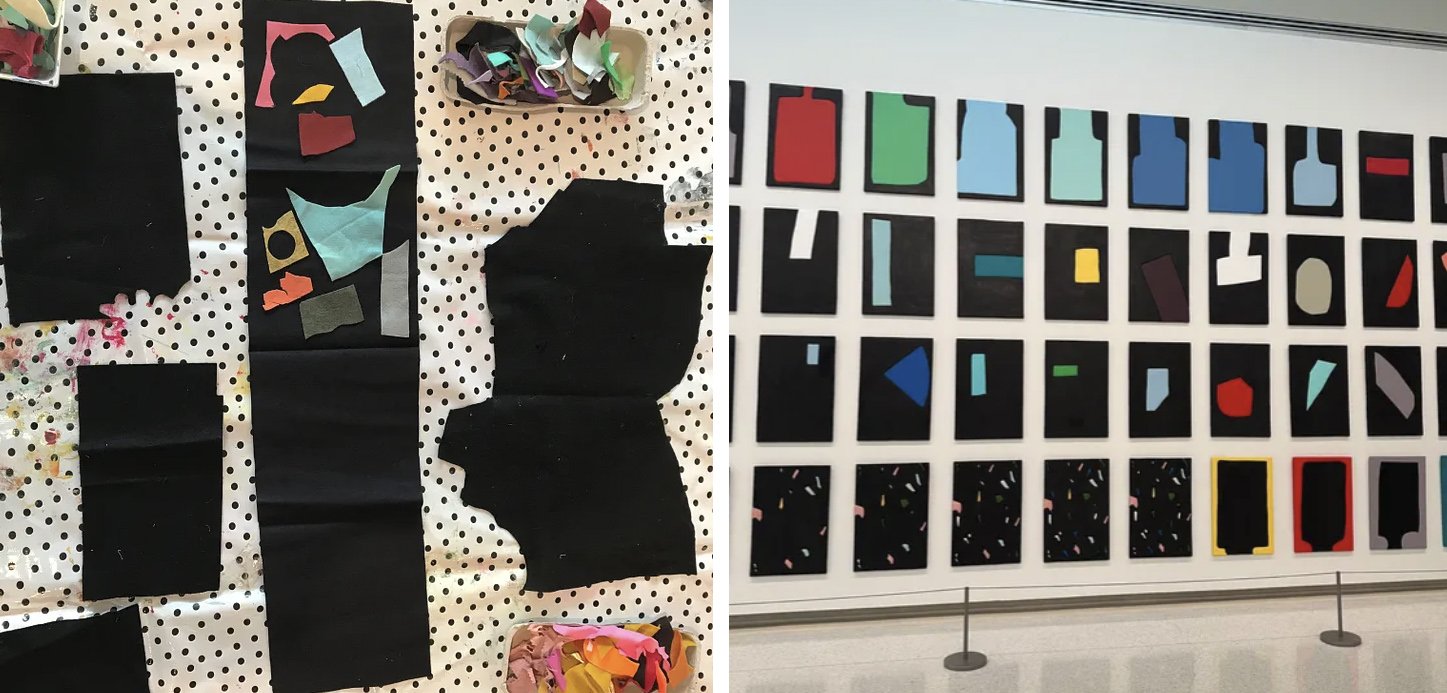
This grid of rectangles with colorful shapes by Sadie Benning at the CMOA reminded me of all the felt scraps we have and how striking they look on black!
Bring the art experience back to the classroom space.
When we look at art, even without children, we are constantly inspired to offer new combinations of materials loosely guided by the art we see. When I saw a grid of black rectangles with colorful shapes arranged in each one at a museum, I was inspired to offer black felt with lots of colorful scraps in the classroom. Throughout my most recent visit, I saw many artworks that I think could be a real creative spark for children of all ages. After you go on a field trip, consider bringing the ideas home or back to the classroom with open-ended invitations that are loosely connected or inspired by the artworks. The goal is not to recreate another artist’s work, but to make meaning and extend the experience. Read more below about the “artist connections” in our guides, where we practice this idea of creative play inspired by artists.
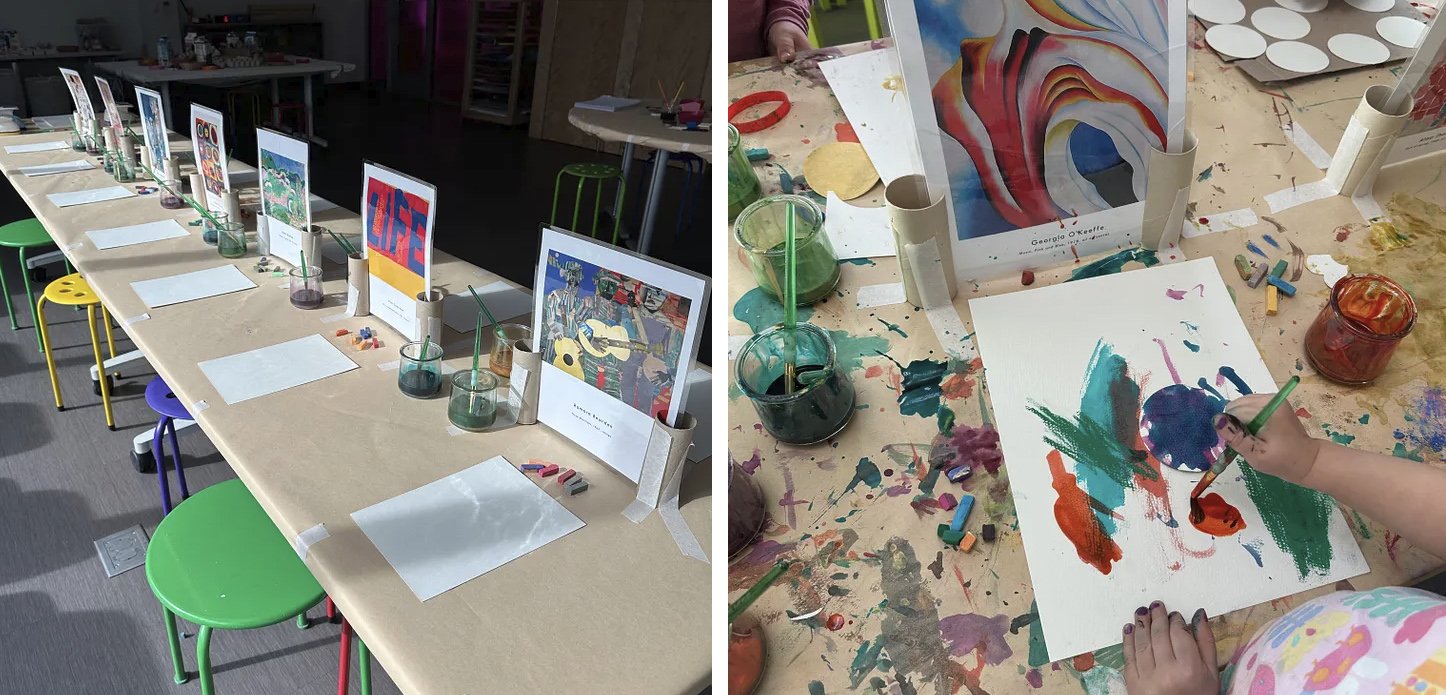
This was an open invitation for exploration with liquid watercolor and chalk pastels. At her library workshop, Bar put the images by famous artists there as inspiration; a provocation. The child on the right was around age 4, interpreting Georgia O'Keeffe's shapes, colors, and movement. Read more about this experience here.
What’s the point?
Besides honing observation and careful noticing skills, looking at art introduces children to the idea that people can express themselves visually in a vast array of ways. Each of us has the ability within to create and explore, and looking at art helps to introduce history and current events. If you feel comfortable, introducing more provocative works to older children can really expand their thinking about what art is, what it is made from, and the ideas and context that inform it. Art is everywhere, so the next time you encounter it, stop, notice, and wonder playfully.
Making Artist Connections Visible with Curated Materials
When we first started writing and publishing our Art and Play guides five years ago, we wanted to offer more than just a bunch of creative ideas. We had a much bigger goal of shifting mindsets to see art as play and, therefore, essential to learning. With our strong art school backgrounds, it just felt important and authentic to connect one playful artist in each guide to some of the invitations inside. We ended up highlighting 36 artists over the course of three years! From artists who work on a grand, public scale to painters and collagists, our artists span a wide range of genres.
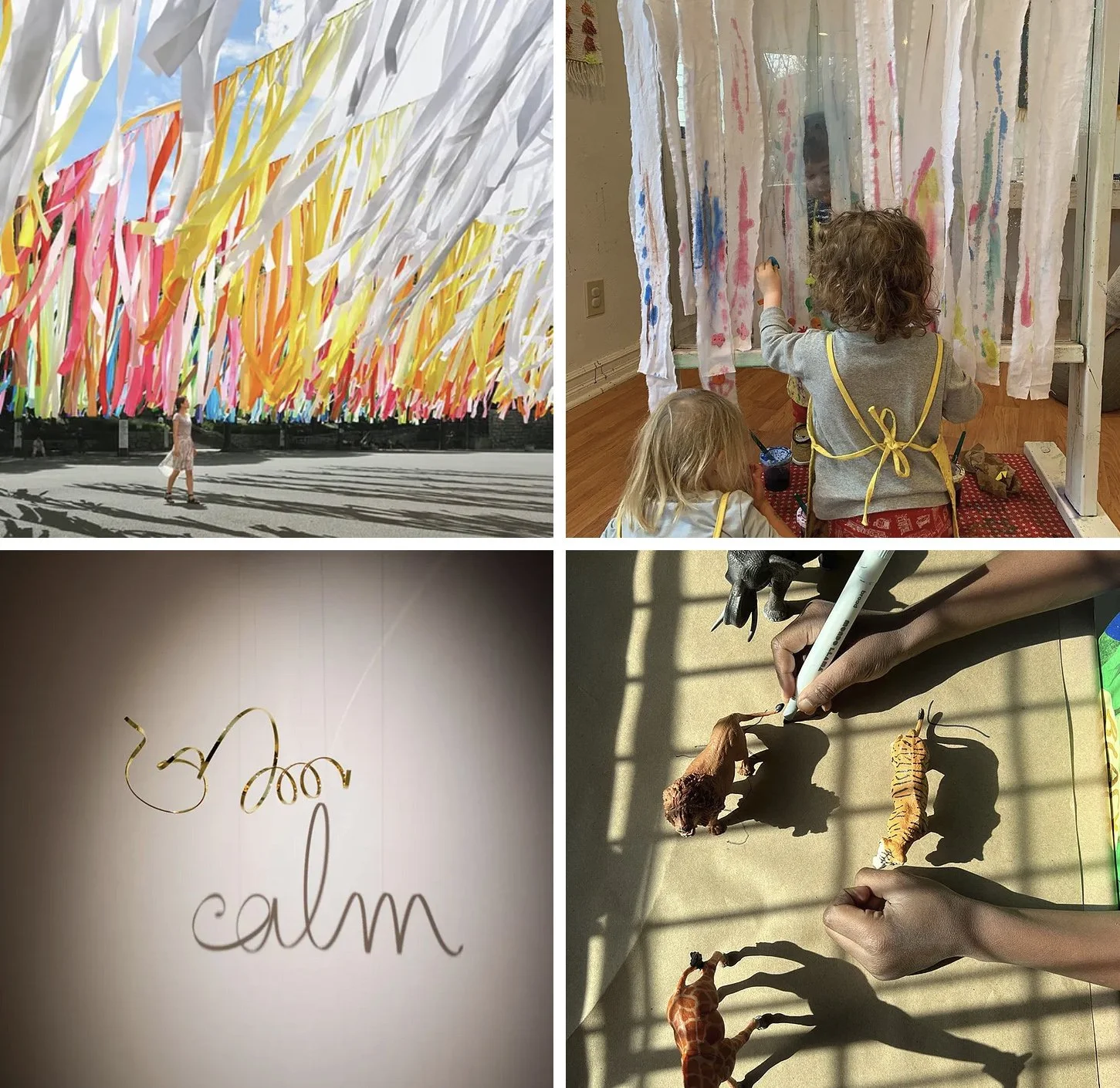
Artist Emmanuelle Moureaux's "100 Colors" installation in Tokyo inspires a painted fabric setup on an easel. Frederick Eerdekens shadow art inspires a shadow play invitation with animal figurines.
We call them “artist spotlights,” and they provide children (and grown-ups) with opportunities to learn about an artists path and see their work as essential to the fabric of life; connect materials to bigger artistic concepts like form, shape, color, and balance; provide ways to notice and appreciate diverse perspectives from around the world; and, of course, to establish an early foundation of art appreciation! Making these artist connections visible for young children is just one way to nurture their curiosity. You never know when or where you might plant the seed for a future artist and changemaker.
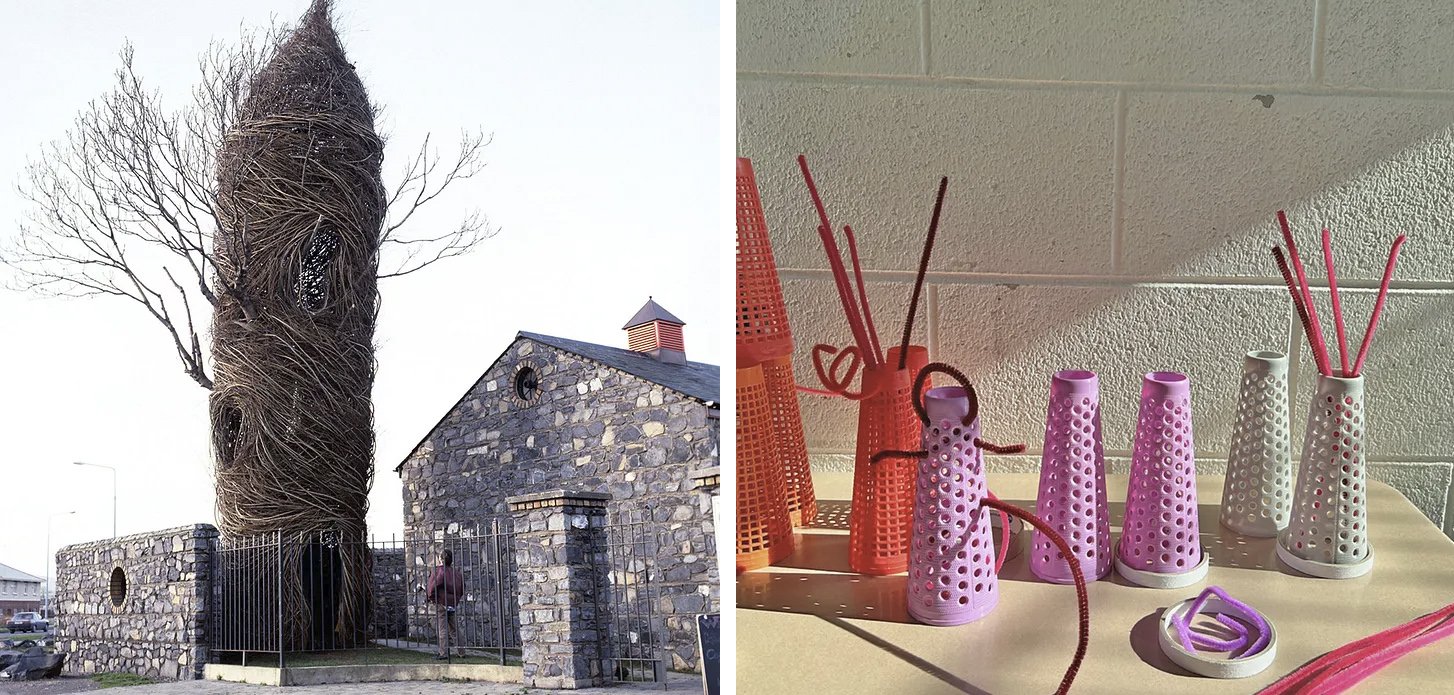
Patrick Dougherty's twisted "Roundabout" structure using vines and branches in Dublin inspires a play invitation with yarn cones and pipe cleaners.
Read more of our free Substacks once a month, or subscribe to support our in-depth weekly journals.